Excellent
4.7 out of 5 Stars
4.7 out of 5

Autopen vs Hand-Signed Autographs: How to Tell the Difference

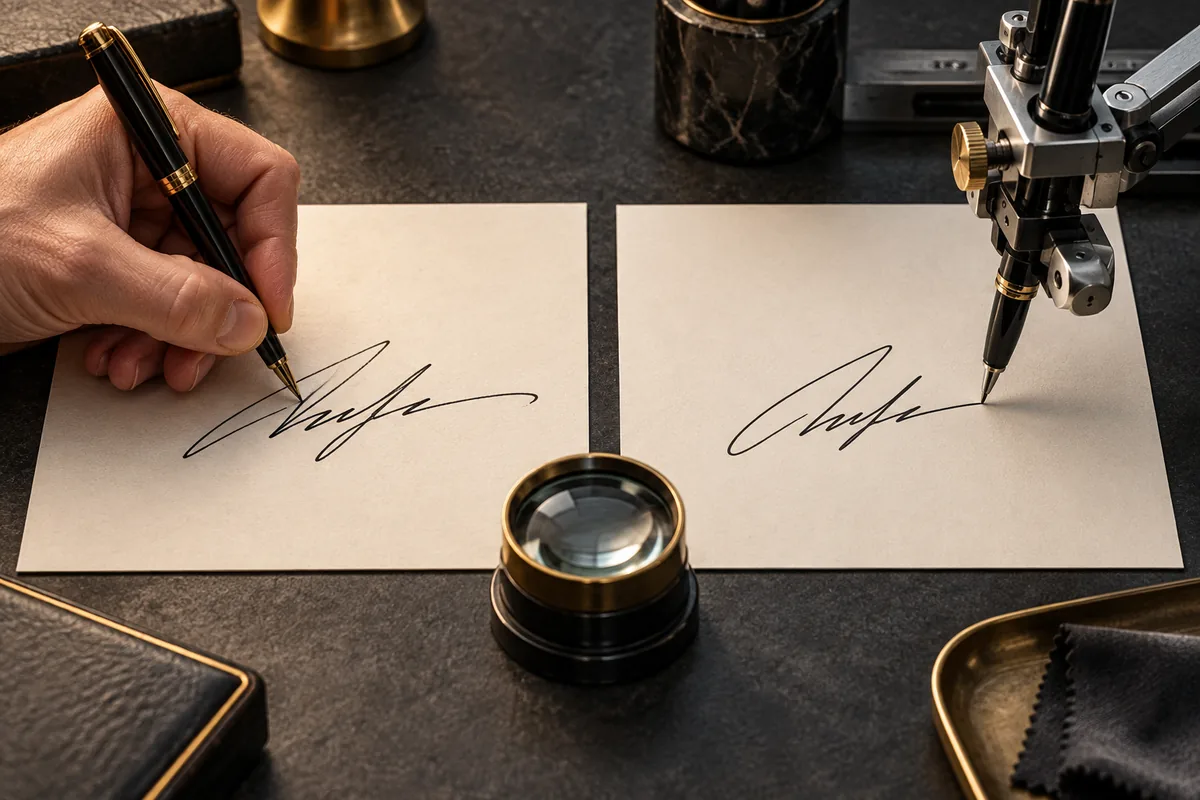
An autograph can contain real ink without being personally signed. Autopen machines use a stored pattern to reproduce a signature, while a hand-signed autograph is written directly by the named signer.

That distinction matters when a listing describes memorabilia as signed. The signature method, the item that was signed, and the available authentication documentation should all be clear before you order.

Autopen vs Hand-Signed Autographs: What Is the Difference?

A hand-signed autograph is written by the named person directly on the item. An autopen signature is applied by a machine that guides a real pen through a stored signature pattern. Both may place ink on the surface, but only one was personally written by the signer.

FeatureHand-SignedAutopen
Who applies the signature?The named signerA machine using a stored pattern
Ink on the item?Usually, yesUsually, yes
Natural variation?Expected between examplesThe same pattern can repeat closely
Does the term alone prove authenticity?NoNo
How should it be described?Hand-signed only when supported by the available evidenceClearly identified as autopen

The words “signed” and “autographed” do not always explain how a signature was produced. Read the complete description and check the available documentation rather than relying on a short product title alone.

What Does Hand Signed Mean?

Hand signed means the named signer physically wrote the signature on the item. It does not mean the autograph was printed as part of the artwork, stamped onto the surface, written by an assistant, or applied by an autopen.

The phrase describes the method of signing, not the quality of the evidence. A handwritten mark can still be misidentified or forged. Buyers should separately consider provenance, witnessed-signing information, certificates or letters, matching identification numbers, and any third-party authentication associated with the specific item.

Also confirm which component was signed. On music memorabilia, the autograph might appear on a vinyl cover, sleeve, insert, booklet, art card, disc, guitar, or another component. If the signed component is not stated clearly, ask Autographia before ordering.

What Buyers Should Confirm About the Signing Method

A buyer does not need to perform technical signature examination to request clear information. The listing should state whether the signature is hand-signed, autopen, printed, stamped, secretarial, or another format.

  • Which physical component carries the signature.
  • How the signing method is described.
  • Who issued the Certificate of Authenticity.
  • Whether any third-party documentation belongs to that exact item.
  • Whether ownership, stage-use, game-use, production-use, or event claims are documented separately.
  • What condition and supporting materials are included.

If the signing method is not clear, ask the seller before purchasing. Do not assume that real ink, a handwritten appearance, a hologram, or a certificate alone establishes that an item was personally hand-signed.

Autopen vs Printed, Stamped, and Secretarial Signatures

Autopen is only one way a signature can appear without being personally written by the named signer.

  • Autopen: a machine moves a pen through a stored signature pattern.
  • Printed facsimile: the signature is reproduced as part of the printed image or design.
  • Stamped signature: ink is transferred from a stamp made in the shape of a signature.
  • Secretarial signature: another person writes the public figure’s name, usually in an attempt to imitate that person’s signature.

Each category should be described accurately. “Real ink” does not automatically mean hand signed, and “looks handwritten” does not establish who wrote it.

Are Autopen Signatures Worth Anything?

Some collectors are interested in autopen items because of the person, event, document, or design involved. They remain a different category from hand-signed autographs and should not be presented as equivalent. Any assessment depends on the complete item, its context, condition, documentation, and current collector demand.

The practical rule is disclosure. A buyer should know whether an item is hand signed, autopen, printed, stamped, or secretarial before making a decision.

When Item-Specific Documentation Is Needed

Authentication and documentation apply to a specific item and stated conclusion. A COA, third-party record, witnessed-signing record, or provenance document should be read together with the product description and photographs.

Submission to an authentication service does not guarantee a particular result. If the distinction between hand-signed and autopen matters to a purchase, review the exact documentation included with that item and ask for clarification before ordering.

For more context, see Autographia’s guide to choosing an autograph authentication service, learn what a Certificate of Authenticity proves, and review why provenance matters in autograph authentication.

What to Check Before Buying a Hand-Signed Autograph

  • Signing method: Look for an explicit statement that the item was hand signed.
  • Signed component: Confirm whether the autograph is on the cover, sleeve, insert, booklet, art card, instrument, or another component.
  • Item-specific documentation: Check the available certificate, letter, hologram, serial number, or witnessed-signing information.
  • Issuer: Identify who evaluated or documented the item rather than assuming every COA represents the same process.
  • Description gaps: Ask before ordering if the signature method, signed component, authentication, condition, dimensions, or included display materials are unclear.

You can also review Autographia’s authentication information and browse the current signed music memorabilia collection.

Current Examples of Hand-Signed Memorabilia

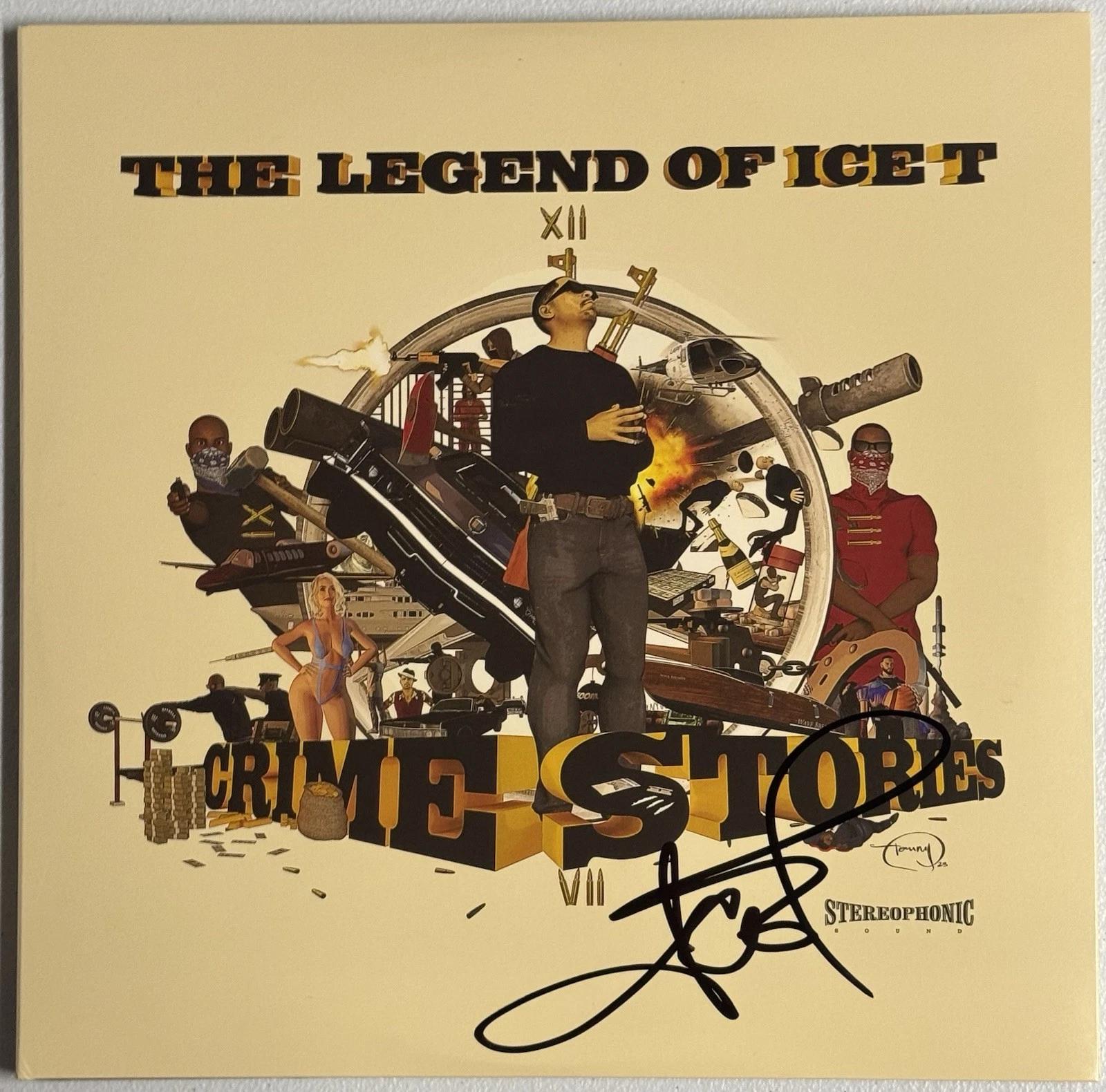
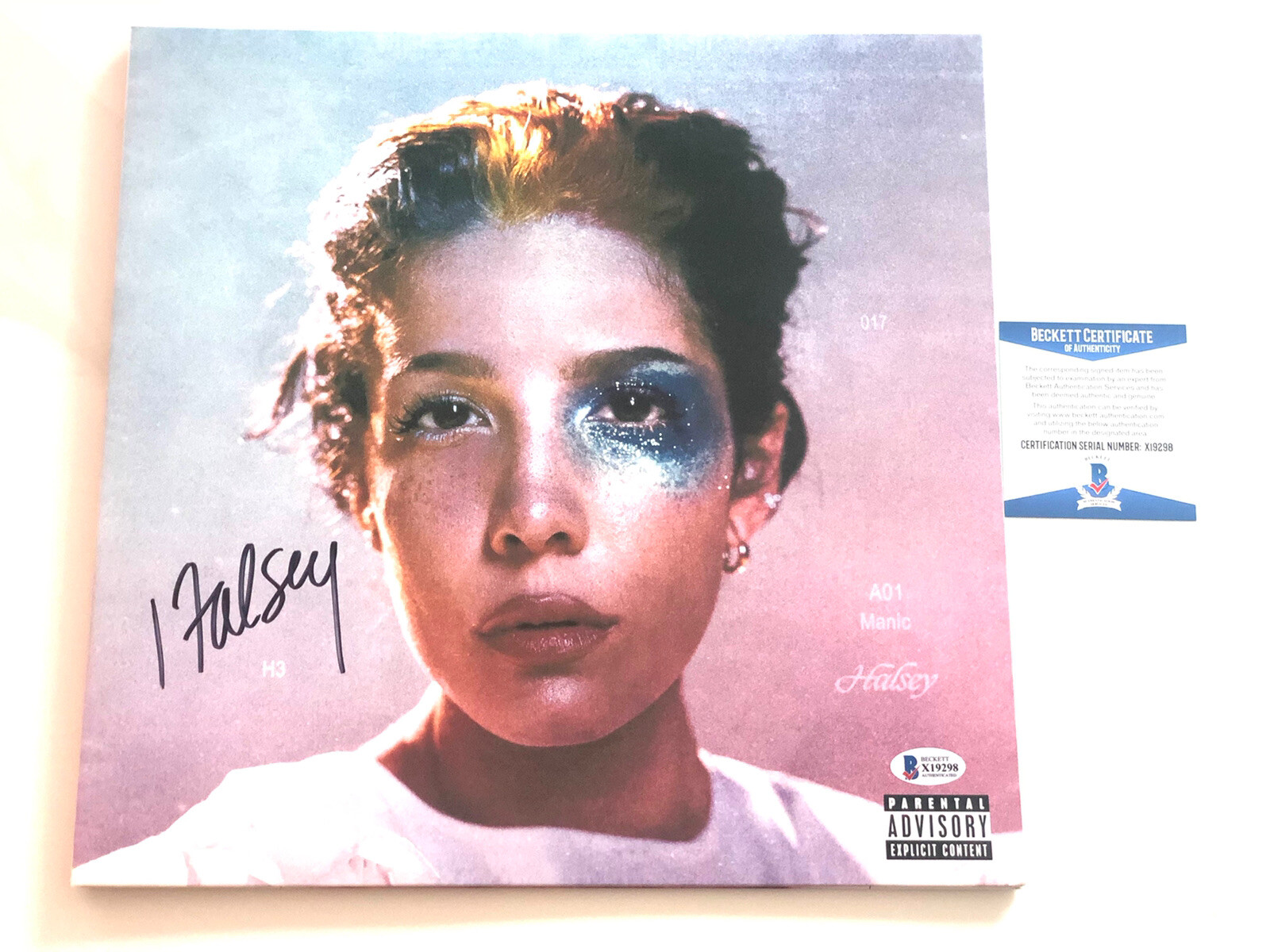
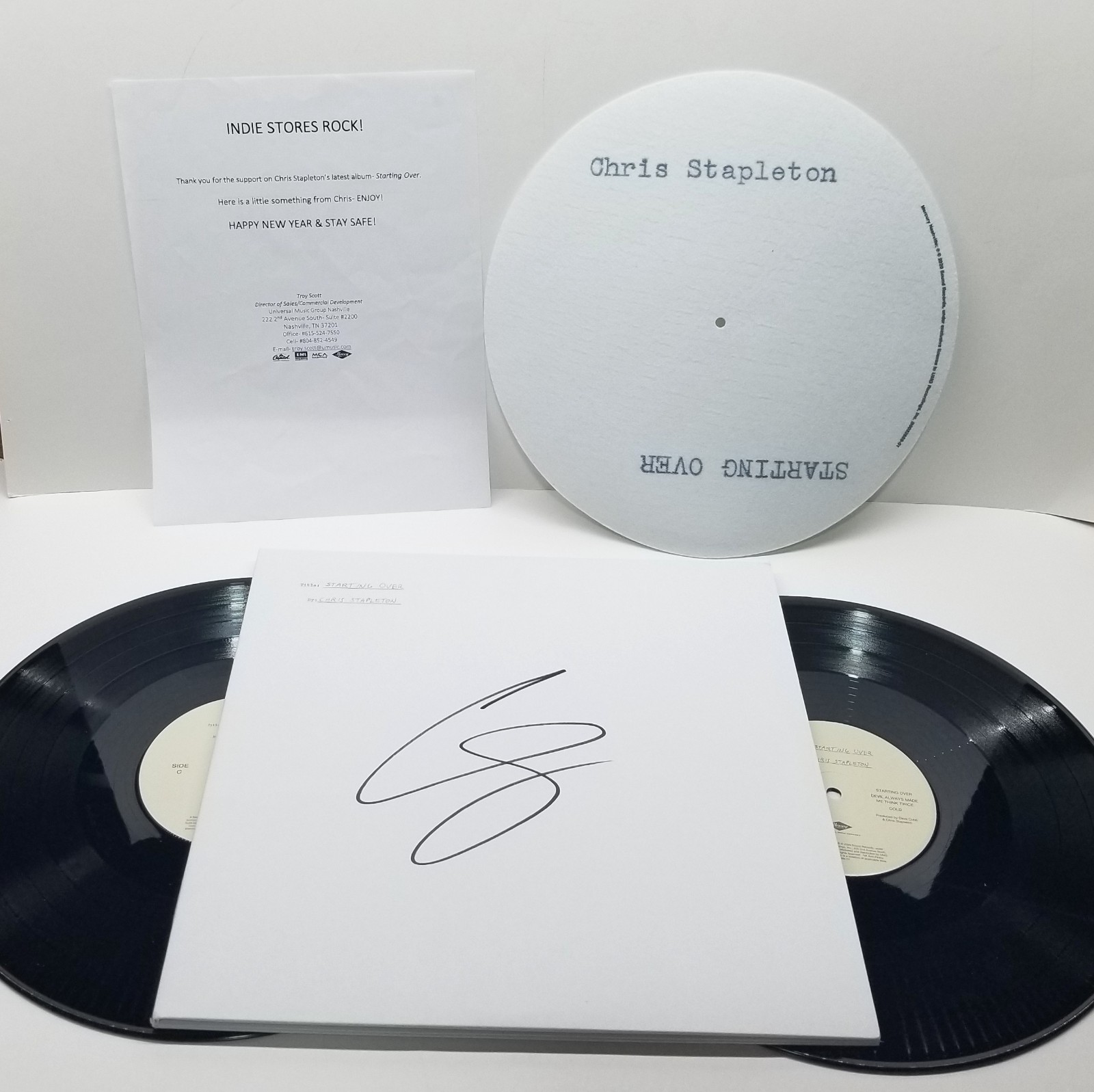
These current listings are identified as hand signed and reference item-specific third-party documentation in their titles. Inventory changes as individual pieces sell. Review the available product details and authentication before ordering, and contact Autographia if something you need to know is not stated clearly.
Frequently Asked Questions

What does hand signed mean?

Hand signed means the named signer personally wrote the signature on the item. The phrase does not include autopen, printed, stamped, or secretarial signatures. It also does not replace item-specific authentication or provenance.

How can I tell if a signature is autopen?

A product description should state whether a signature is hand-signed, autopen, printed, stamped, or secretarial. Review the exact signed component and item-specific documentation, and ask the seller if the signing method is unclear. No single visual feature or certificate establishes the answer by itself.

Is an autopen signature the same as a printed signature?

No. An autopen machine normally moves a pen and applies ink using a stored pattern. A printed signature is reproduced as part of the printed image or design. Neither should be described as personally hand signed.

Are autopen signatures worth anything?

Some collectors are interested in autopen items because of their subject, history, or design. They are a separate category from hand-signed autographs and should be labeled accurately. Any assessment depends on the complete item, context, condition, documentation, and current collector demand.

Is an autopen autograph fake?

An accurately disclosed autopen is not the same as a forged hand signature. The problem arises when an autopen item is represented as personally hand signed. Clear descriptions allow buyers to understand what they are considering.

Does a COA prove that an autograph was hand signed?

Not by itself. A COA is only as useful as its issuer, item identification, supporting evidence, and verification process. Check whether the document is tied to the exact item and what conclusion the issuer actually reached.

Fake Autograph Scams: How Collectors Get Burned (and How to Avoid It)

The safest way to approach a signed item is to make the seller explain the transaction before you pay. Ask what was signed, which item you will receive, what documentation comes with it, who stands behind the claim, how it will ship, and what happens if the delivery doesn’t match the listing.

You do not need to diagnose a signature from an online image. In fact, trying to make a forensic judgment from limited photographs can create false confidence. A more practical buyer-protection routine focuses on item-specific information, written policies, accountable sellers, secure payment, and records you can use if something goes wrong.

The Core Rule: Do Not Let One Detail Carry the Whole Purchase

A confident seller, an attractive frame, a certificate, a personal story, a low price, or a marketplace badge can each influence a buyer. None should replace a complete review of the offer.

Before purchasing, confirm four things:

  1. The item: What exactly is being sold, and is it the piece shown?
  2. The documentation: What comes with this specific item, and what does it actually address?
  3. The seller: Who is responsible for the description, delivery, and any later claim?
  4. The transaction: What written shipping, return, and authenticity terms apply?

If the answers remain vague, pause. A legitimate opportunity does not require you to accept missing information.

Question 1: Is This the Exact Item I Will Receive?

Ask whether the listing photographs show the actual object or a representative example. That distinction matters when signatures, inscriptions, edition numbers, condition, and documentation can differ from one item to another.

If the seller uses a representative image, ask:

  • How will the delivered item differ?
  • Will signature placement, ink color, inscription, condition, or edition number vary?
  • Will the same type of certificate or letter be included?
  • Can the seller provide photographs of the assigned item before shipment?
  • Can you cancel if the assigned item materially differs from the example?

For a unique or older item, request clear views of the front, back, autograph area, edges, corners, frame or case, documents, and all stated flaws. The goal is not to analyze pen strokes. The goal is to ensure the description and delivered item can be compared.

Question 2: What Item or Surface Was Signed?

A short title can hide an important distinction. “Signed album” may mean the jacket, an insert, an art card, the label, or another part of the album package. A “signed CD” may have an autographed booklet while the disc is unsigned. A framed poster may include a separate signed cut or photo.

Ask the seller to identify:

  • The signed item or surface
  • Whether the signature is directly on the displayed item or on an added element
  • Every item and accessory included in the sale
  • Whether shown records, discs, cases, stands, mats, or frames are included
  • Each identified signer on a multi-signed piece

Also separate a signed object from claims about the object itself. An autograph on a guitar does not establish that the signer owned or played the guitar. A signature on a jersey does not establish game use. Any use, ownership, or event claim should be stated separately and supported by relevant provenance.

Question 3: What Documentation Comes With This Specific Item?

Do not ask only, “Does it have a COA?” Ask for the complete documentation package.

Useful questions include:

  • What certificate, letter, invoice, provenance record, or signing documentation is included?
  • Who issued each document?
  • Does it identify the signer and describe the signed item or surface?
  • Does it include an item-specific number or image reference?
  • Where does that number appear on the item or associated paperwork?
  • Is there a stated online record or other verification path?
  • Is the original document included, or a copy?
  • Will the documents be listed on the invoice or packing record?

A COA is a statement from its issuer. A polished design does not explain the issuer’s identity, the scope of the statement, or its connection to the item. Read the document itself and compare it with the listing.

Seller-issued documentation and an independent third-party opinion are different. Some products may have third-party documentation; others may not. Never assume a seller’s entire inventory carries the same form of authentication.

For a detailed checklist, read what a Certificate of Authenticity should contain.

Question 4: What Provenance Is Included, and How Does It Relate to the Item?

Provenance is an object’s documented history. It may include an original receipt, an event record, prior ownership information, correspondence, a ticket, or a photograph associated with a signing.

Ask whether each record connects to the specific piece. A general photo of a celebrity at a signing table may show that an event happened without showing that the offered item was present. A seller’s story may provide context, but distinguish details from documents.

Questions to ask:

  • Who is said to have obtained the autograph, and when?
  • Which parts of that account are documented?
  • Does a photograph show this exact item?
  • Are dates, locations, and prior owners identified where known?
  • Are there gaps in the ownership history?
  • Will the provenance records transfer with the item?

A complete history is not available for every older object. An honest limitation is more useful than a vague claim presented as certainty. See why provenance matters when buying signed memorabilia for more context.

Question 5: Who Is the Seller?

Accountability begins with knowing who is taking your payment and who will respond after the sale.

Confirm:

  • The business or seller name
  • A working email address, phone number, or other documented contact channel
  • A physical or returns address when the policy provides one
  • How long the account or business has operated under that identity
  • Whether the seller’s policies are available before checkout
  • Whether the order confirmation will identify the item and seller

Reviews can offer context, but they should not replace the current listing and written terms. Read a range of comments and pay attention to how the seller addresses missing paperwork, shipping damage, returns, and customer questions.

A seller who will not answer reasonable item-specific questions is asking the buyer to accept risk without information. You are allowed to walk away.

Question 6: What Does the Authenticity Policy Actually Cover?

Words such as “guaranteed” can sound comprehensive while leaving the process undefined. Read the complete policy and ask for clarification in writing.

Check:

  • Who makes the promise: the seller, a marketplace, a signing company, or another party?
  • Which items and claims are covered?
  • Is the policy limited to the signature, or does it also address the underlying object?
  • Is there a deadline for making a claim?
  • What evidence or opinion must the buyer obtain?
  • Who pays any evaluation, shipping, or insurance costs?
  • What remedy is offered?
  • Are original documents, labels, packaging, or unaltered condition required?
  • Does a later resale affect coverage?

Do not fill in missing terms with assumptions. Save the policy that was in effect when you purchased.

Autographia publishes general information on its authenticity page. For any purchase, also review the individual listing and the terms that apply to that order.

Question 7: What Is the Return Policy?

An ordinary return policy and an authenticity-related policy may be separate. Read both.

Ask:

  • How many calendar days are allowed, and when does the period begin?
  • Must you request authorization before returning the item?
  • What condition and packaging are required?
  • Who pays return shipping?
  • Are original delivery costs refundable?
  • Are custom-framed, personalized, clearance, or international orders excluded?
  • What happens if the wrong item arrives?
  • What happens if documentation shown or described is missing?
  • How are damage claims handled?
  • Is the refund issued to the original payment method?

A “no returns” statement places more risk on the buyer. If the seller will not explain how misdescribed, damaged, or incomplete orders are handled, decide whether you are comfortable proceeding.

Question 8: Can I Pay Through a Traceable, Protected Method?

Use the seller’s stated secure checkout or a payment method that creates a transaction record. Be cautious if someone asks you to move the conversation and payment to an unrelated channel, send money to a different name, use a method with no practical dispute process, or misstate the purpose of the payment.

Before paying:

  • Confirm the final item and total
  • Save the listing and photographs
  • Save the seller’s answers and policies
  • Confirm the name that will appear on the receipt
  • Review the payment provider’s dispute deadlines
  • Make sure the order confirmation identifies the item

Do not mark a commercial purchase as a personal transfer simply because the seller requests it. Do not let artificial urgency replace documentation.

Question 9: How Will the Item Be Packed and Shipped?

Shipping problems can turn a sound purchase into a dispute. Ask how the seller will protect the actual format.

Flat Paper, Photos, and Posters

Ask about rigid support, moisture protection, corner protection, and whether the item will be shipped flat or rolled. A signed surface should not rub against packing material.

Framed Items

Confirm whether the glazing is glass or acrylic, whether the frame will be protected inside a second box, and how movement inside the frame will be prevented. Ask what to do if the glazing or frame arrives damaged.

Jerseys and Textiles

Ask how folds will be placed, whether the signature area will be protected from rubbing, and whether the item will remain mounted during transit.

Balls, Helmets, Guitars, and Other Objects

Ask how the object will be immobilized, whether accessories will be packed separately, and whether the package will be double-boxed. Confirm how any stand, case, hardware, or certificate will be protected.

For every shipment, confirm tracking, delivery signature requirements, insurance arrangements, carrier-damage procedures, and the deadline for reporting a problem. Photograph visible box damage before opening.

Question 10: What Should I Do When the Package Arrives?

Inspect the delivery promptly while the listing and policies are easy to access.

  1. Photograph any exterior damage.
  2. Open the package carefully and keep all packing materials.
  3. Compare the item with the saved listing.
  4. Confirm the signed item or surface, identified signers, accessories, and documents.
  5. Check whether item-specific identifiers correspond where the listing says they should.
  6. Compare condition with the description and photographs.
  7. Report missing, damaged, or inconsistent contents within the seller’s deadline.

Do not clean, repair, remove labels, discard packaging, or reframe the item while a concern is unresolved. Changes can complicate a return, carrier claim, or payment dispute.

A Repeatable Autograph-Buying Routine

Use the same routine whether you are buying music, sports, movie, television, or historical memorabilia:

Before purchase

Define your goal and maximum budget. Identify the exact signed item or surface. Review item-specific photos and condition notes. List every document that should be included. Read the seller’s identity, authenticity, return, and shipping information. Ask unanswered questions in writing. Save the listing, policies, and replies. Pay through a traceable method.

At delivery

Preserve and photograph the packaging. Compare the contents with your saved records. Report problems promptly. Keep the item unaltered until concerns are resolved.

After acceptance

Store the item appropriately. Keep certificates, receipts, correspondence, and provenance together. Create digital backups. Record any later framing, conservation, damage, or change in condition.

The signed memorabilia buyer’s guide expands this routine with format-specific condition and storage advice.

What to Do If You Believe a Purchase Was Misrepresented

Act promptly and keep the communication factual.

Gather the listing, receipt, seller messages, policies, photographs, and all documentation received. Write down the specific difference between what was offered and what arrived. Contact the seller through a channel that preserves the message. Request the remedy described in the applicable policy. If the seller does not resolve the issue, follow the marketplace, payment provider, or carrier process within its deadline. Consider an appropriate independent opinion if the dispute specifically concerns authenticity and the policy requires one. Preserve the item and packaging while the matter is open.

For suspected criminal fraud or a substantial unresolved loss, consider contacting the relevant marketplace, payment provider, shipping carrier, consumer-protection agency, postal authority, or qualified legal adviser. Which route applies depends on the transaction and jurisdiction.

No checklist can remove every risk. It can clarify the transaction, preserve your options, and help you avoid purchases based on pressure or assumptions rather than reliable information.

For additional context, review why provenance matters and Autographia’s authenticity information. You can also browse current music memorabilia, sports memorabilia, and movie memorabilia.

Frequently Asked Questions

Is a COA enough to make an autograph purchase safe?

No single document makes a transaction risk-free. Read who issued the COA, what item and signer it describes, whether it includes an item-specific identifier, and how it corresponds to the object. Also review the seller, condition, provenance, shipping plan, and written return and authenticity terms.

Should I try to determine authenticity from listing photos?

Use photos to confirm the item, signed surface, condition, documents, and visible identifiers. Do not assume limited online images can support a definitive forensic conclusion. If the purchase depends on an authentication opinion, identify the responsible issuer and understand what that opinion covers.

What if the seller says the autograph was obtained in person?

Ask what documentation supports the account and whether it connects to the specific item. Event details, a receipt, a permitted signing photograph, or a contemporaneous record may add context. A verbal or written story alone should not replace the rest of your review.

Does a low price prove that an autograph is fraudulent?

No. Price alone does not prove authenticity or fraud. It can, however, be a reason to ask more questions about the exact item, condition, documentation, seller, and policies. Do not let either a discount or a high price substitute for due diligence.

What should an invoice for signed memorabilia include?

It should identify the seller, buyer, date, item, amount paid, and order number. Ideally, the item description should name the signer, format, signed item or surface, and any documentation promised with the order. Save the invoice with the listing and delivery photographs.

What if a certificate or letter is missing from the delivery?

Photograph the contents and packaging, compare them with the saved listing and invoice, and contact the seller promptly. Keep the item and packaging unchanged, and request the missing document or another remedy available under the policy.

What shipping details matter most for framed or fragile memorabilia?

Confirm packaging method, internal support, glazing type, double-boxing where appropriate, tracking, insurance arrangements, signature requirements, and the process and deadline for reporting damage. Photograph exterior damage before opening the package.

How long should I keep purchase records?

Keep them for as long as you own the item, and transfer relevant records if the item changes hands. Preserve the listing, receipt, correspondence, delivery photos, certificates, provenance, condition notes, and information about later framing or conservation.

Neil Young Memorabilia and Other Philanthropic Facts about the Musician – Teaming Up with Salesforce for Hospital Fundraiser

Neil Young is one of the most prominent musicians in rock ‘n roll. Though fame has been a part of his livelihood, he still has made time for philanthropy. One such event he did was a concert to help raise funds for a hospital for children in San Francisco. This is an excellent example of why the artist is beloved by many and encourages people to buy Neil Young memorabilia still to this day.


The Event


On December 8, 2010, Neil Young headlined a concert at Nob Hill Masonic Auditorium in San Francisco. Joanna Newsom was the opener, and the Salesforce.com Foundation had underwritten the performances.


Funds raised from ticket sales went to help advance health care, particularly toward a new building for UCSF Benioff Children’s Hospital at Mission Bay, which would be a new unit for women, children, and cancer patients.


The concert would be a vital resource for funding. Suzanne Dibianca, the executive director of the Salesforce.com Foundation, stated the importance of UCSF Benioff Children’s Hospital within the Mission Bay community.


Honored guests who purchased tickets watched Neil Young inspire not only the local community but also the world through his philanthropic efforts.


The night began with a cocktail reception at 6:30 and a special welcome. Then, the performance commenced with the concert beginning at 8:15, followed by a post-performance reception.


About UCSF Benioff Children’s Hospital


The hospital serves the youngest patients in San Francisco and the entire bay area community, including cancer patients. It is ranked as a top hospital in the country.


While the concert took place in 2010, the hospital building that the concert funds raised went toward opened in 2015. It included 289 beds within a world-class facility that would serve healthcare patients of the Mission Bay area.


Neil Young’s History of Philanthropy

Besides his concert at Nob Hill Masonic Auditorium, Young has participated in plenty of other fundraising efforts to help healthcare patients and more. Some of the causes he has supported include:

  • Farm Aid
  • Live 8
  • MusiCares
  • Global Poverty Project


He has joined other endeavors to help raise money too. His supporters are more inclined to purchase his memorabilia not just for his achievements in music but also because of his contributions.


Neil Young Collectibles


The effort to raise money for UCSF Benioff Children’s Hospital is just one of the contributions Young has made to charity. When artists of such stature participate in events like this, other talented and influential musicians are encouraged to do the same.


Neil Young is a beloved artist, and his philanthropic participation makes him all the more likable.

Fans can purchase memorabilia and collectibles to honor the “Harvest Moon” singer.


You can purchase a variety of memorabilia, including signed merchandise by the musician himself. Such items include posters, music booklets, and albums. There is no limit to what you can buy to support Neil Young, his music, and his effort to positively impact communities.


George Lucas Signed Memorabilia – How the Filmmaker Made a Fortune from Star Wars

Star Wars is one of the highest-grossing movie franchises of all time. Since its release in the 1970s, the franchise has exponentially expanded to include several movie sequels and handfuls of spin-offs. Fans can show their love of these influential movies from their inventor with George Lucas signed memorabilia.


How Lucas Got His Start Building the Star Wars Movie Franchise


George Lucas is a filmmaking success story. Closely tied to science fiction, he made his debut in the 1971 film THX 1138. He was also the director of the 1973 movie American Graffiti, which Francis Ford Coppola produced. Today, George Lucas has a net worth of about $7 billion for his successful development of Star Wars and Indiana Jones.


The first movie in the Star Wars franchise was released in 1977. Lucas describes his original idea of the film being a “Western set in space.” After the success of American Graffiti, he reached a deal with Fox Studios to make the movie. The company also settled two of his requests – that he retain merchandising rights and the rights to any sequels. At the time, Fox did not know the franchise would go on to break box office records throughout the world, even 40 years later with the release of The Force Awakens. 


What Makes George Lucas Successful


George Lucas is so prosperous because of his patents, trademarks, and thousands of copyrights. He adamantly works to retain rights, including merchandising rights for himself and Lucasfilm.


Patents and Trademarks


Patents are the recognition of a government entity that a person is the sole owner of an invention. A trademark is the registration of a company or business to separate itself from others.

Lucas acquired patents and trademarks for anything related to his movies, including toys, merchandise, and other similar items.


Although Disney bought Lucasfilm, Lucas still makes money off any of the company’s development of the Star Wars franchise, including themed rides and similar technologies, such as real-life lightsabers. He is recognized as the creator of these items and receives payments for this connection.


Copyright


The idea of copyright protects certain elements of a franchise or company. Other sellers cannot include specific copyrighted components in their advertising or materials because they would be making money off of someone else’s creation. R2-D2, Yoda, and even the term “Jedi” are all considered copyrighted.


Rights for Merchandising


Star Wars-themed toys are a prominent sales tactic. George Lucas was able to acquire the rights to any products that would enhance the recognition of the Star Wars franchise. As such, he makes money off the media, toys, and more than fans shop for.


Purchasing George Lucas Signed Merchandise and Memorabilia


George Lucas is a big name in Hollywood. Having created two beloved film franchises, he continues to find financial success for his association with Star Wars – even if Disney now owns his film production company Lucasfilm.


Fans can purchase autographs and other signed memorabilia from the creator of the Star Wars franchise, showing their love for the movies and the man behind the camera. There are plenty of autographed items to select from, including posters and scripts.


Luke Combs Signed Memorabilia – The Country Music Singer’s Considerate Autograph Policy


Luke Combs is a prominent country star who consistently shows support for his fans. The “When It Rains It Pours” singer does not let fame get to his head, as he unfailingly thanks his fans for supporting him. As such, it is not uncommon for him to sign autographed photos for fans, or Bootleggers, in the front row of his concerts. Luke Combs signed memorabilia is a fantastic way of showing support for the grounded musician.


Luke Combs and His Consistent Generosity


While his music is his leading cause for fame, Combs is also an industry leader and keynote speaker. People can book him for upwards of $6 million for events of all kinds. However, Bootleggers get access to seeing his generosity in action at his concerts.


During a Friday show in September of his “The Middle of Somewhere Tour” at the Maine Savings Amphitheater, Luke Combs noticed a sign created by two young concertgoers. It mentioned how they were able to afford tickets for the show – by stacking five cords of wood.


The young fans Bo Fenderson and Tanner Hale told him between songs that one of them had just turned 12. Out of appreciation, he gave them $140 in cash and promised to pay back the rest for their tickets. Luke Combs signed autographs for them, too, when he met the children after the show.


Combs continued to express his generosity the next night. He began to experience vocal issues. Many artists in the industry would normally cancel a show in this situation. However, Combs applied the well-known mantra to his life – “the show must go on.”


Before the start of the show, the artist explained his condition to the crowd and declared that everybody’s ticket in the audience was refunded. Combs stated that he would still try to perform the “best free show possible. ”


Tips for Making a Luke Combs Concert Unforgettable


Luke Combs performs all over the world – from France and Ireland to Australia and New Zealand. Bootleggers across the globe know that there is no better feeling than right after they buy tickets. Going from the website checkout to hearing your favorite song by Luke Combs live is incredible.


However, there are some things you can do to make the experience better, and possibly increase your chances of getting a Luke Combs autograph.


Dress Comfortably


You are probably going to be standing for most of the show. Try to dress how you want but keep comfort in mind. You don’t want to regret the shoes you selected hours ago thinking you could power through the pain.


Check Bag Policy


Most shows have similar bag policies, but every venue is different. You can avoid hiccups in line by checking the bag policy in advance.


Enjoy the Moment


Most importantly, be present in the moment. You may be inclined to take lots of photos but remember there is no gift like the present.


Search Luke Combs Autographs and Other Merchandise


The “Beautiful Crazy” singer has a generous autograph policy, as he loves and appreciates his fans. You can purchase memorabilia and add new items to your Luke Combs collection to support the big-hearted artist.

Auctioned Eric Clapton Memorabilia Benefits Crossroads Centre Antigua


Eric Clapton is a namesake in the music industry. After rising in success, Eric Clapton founded the band “Cream” alongside Jack Bruce and Ginger Baker. He would then go on to be a member of Derek and the Dominos and develop a successful solo career. Fans of the musical icon can purchase Eric Clapton memorabilia to express their love and appreciation for him.


Clapton’s legacy goes beyond just the music industry. He also participates in philanthropic events and causes, having founded the Crossroads Centre Antigua.


In support of the Crossroads Centre, Bonhams Knightsbridge held an auction of the musician’s songs on Wednesday, June 29, 2016.


About the Event


An auction by Bonhams at the Entertainment Memorabilia sold items to benefit Crossroads Centre Antigua in 2016. Katherine Schofield, the head of Entertainment Memorabilia for Bonhams, stated that the items being auctioned are highly collectible, incentivizing fans to make large purchases. The money would go toward a fantastic cause.


Items Being Sold


Eric Clapton received certificates for some of his hit songs from Broadcast Music Incorporated. These included more than eight million performances of both songs, “Layla” and “Wonderful Tonight.” Each was estimated to cost between $2,000 and $4,000.


Among Clapton’s vast collection of songs, “Layla” takes a spot on Rolling Stone’s list of 500 greatest songs of all time. As such, the certificates would have a significant effect on the funding for Crossroads Centre.


Where the Money Raised Goes


The money from the auction event went toward the Crossroads Centre Antigua.

Eric Clapton has held more auctions since 2016, selling other entertainment memorabilia.


Recently, he sold guitars from his personal collection. One guitar was from a 1969 Blind Faith performance in Hyde Park, London. Most often, these events raise money for the Center in Antigua since it is closely tied to Clapton’s name.


About the Crossroads Centre Antigua


Clapton founded the organization in 1998 for drug and alcohol addiction treatment. He stated that it is successful but always needs more funding to help its patients. The benefit of having the center on the island of Antigua is to maintain their privacy and uphold a fulfilling road to recovery.


Eric Clapton’s History of Philanthropy


The musician has participated in many charitable causes and supported several organizations. Some of his work outside of music has benefitted some of the following:

  • UNICEF
  • Teenage Cancer Trust
  • Yéle Haiti Foundation
  • Special Olympics


He has supported many more causes by using his fame to assist others.


Eric Clapton Collectibles and More


Eric Clapton has been making music since the early 1960s when he was only a teenager and joined the band The Roosters. Since then, he has written noteworthy songs and performed alongside some of the biggest names in the music industry.


Fans can share their love for the musician with memorabilia and illustrious collectibles. Many of Eric Clapton’s music lovers enjoy buying merchandise, such as signed posters, albums, and books. You can even own his autobiography containing his signature.

There are endless ways to show your support for Eric Clapton.


Phishing Around for Phish Memorabilia

Having Phish memorabilia is telling that you are a devoted Phishhead. After 40 years of making an impact on the music industry, you can show your love for the band through the merchandise you own.


Nevertheless, finding authentic collectibles can be a challenge. Phish merchandise can be rare to find as noteworthy items could be hidden in the files of someone’s office or because many fans do not want to part with their collectibles.


Continue reading to learn about how to ensure you get authentic Phish collectibles for your home.


History of the Band


Phish formed in Vermont in 1983, first performing on stage in December of that year. The principal members consisted of Ernesto Giuseppie “Trey” Anastasio III and Jeff Holdsworth.


Later, they would accept Jon Fishman as the drummer of the group. Mike Gordon joined soon after alongside another drummer, Marc “Daubs” Daubert.


Many Phish fans may be familiar with the guys not having a successful first show. During their first gig, they performed two songs before being replaced by the stereo.


The band continued to change. They landed on their well-known lineup when they acquired Paige McConnell, and after Daubs and Jeff Holdsworth left.


Today, fans note the band’s experimental fusion of funk, rock, jazz, and other genres.

Due to their eclectic style, the business of merchandise can be tricky. Fans often get worried they may not find a specific piece, as consignments do not always help. Fortunately, there are other options.


Popular Phish Memorabilia Items


Since the founding of the band, Phish has released so many forms of merchandise that fans can collect, gift, and trade. The most valuable items feature signatures from band members. However, you can acquire collectibles free of autographs if that suits your fancy.


There is a large selection of Phish items you can purchase to add to your collection. Since the band has been around for 40 years, you may not always end up with the latest version of their merchandise, but vintage items are more impressive to friends and fellow Phishheads.


Create, complete, or continue your Phish collection with some of the following items:

  • Concert posters
  • T-shirts
  • Signed albums
  • Flyers
  • Tickets


Process of Getting Authentic Memorabilia and Collectibles


You do not have to pay a ridiculous price to get Phish posters and other memorabilia, even from concerts. Though Phishheads can have trouble finding authenticity in their desired merch, there are other things they should consider on their hunt through consignments.


Identify Your Price Range


The first custom a fan should practice when looking through consignments is to identify their price point.


If you find a rare consignment, it can be challenging to stick to that promise of how much to pay, but it can save your wallet in the long run. You want a good value before you click.


Find a Reputable Seller


Groups of Phish fans often have trouble finding a reputable dealer. As such, research is crucial when finding a business your trust with your money. To decide, you can check how companies facilitate sale transactions, how often they update their website and stock, and what other past customers have noted about the services they provide at the shop.


Also, look at shipping costs, and if they have sought-after items, like Ken Taylor, David Welker, or Tyler Stout posters.


Acquiring Your Phish Memorabilia


Phish posters, shirts, and other memorabilia make for great gifts. They are also an excellent way to show your true colors as a Phishhead. No matter the reason you are searching for authentic items, getting Phish does not have to be too challenging.

Led Zeppelin Memorabilia – A Complete Guide to the Classic Rock Band’s Music and Merchandise

Many major artists cannot capture the same magic that enamored Led Zeppelin’s audiences. With surprising influences across multiple genres, the music created by this supergroup band would solidify its importance in popular culture. To show your love for one of the greatest rock bands of all time, purchase Led Zeppelin memorabilia.


In the meantime, continue reading to learn about this influential group, and if you are a new fan, discover how to start listening to them.


The Group’s History


There are several fun and useful resource tools about the band’s history. Leading scholars of the music industry often focus on Led Zeppelin because of their huge success and the derivative artists who would be inspired by them.


Formed in 1968, the group was initially named “The New Yardbirds.” This is because the former guitarist of the Yardbirds, Jimmy Page, was the founding member. However, Keith Moon of The Who said the group would plunge like a “led zeppelin.”


The official lineup would be complete with Page, lead singer Robert Plant, drummer John Bonham, and John Paul Jones on bass.


With the release of their first few albums, the band’s popularity only grew. Many people considered Led Zeppelin as one of their favorite artists as they became the biggest band in the United States and the United Kingdom.


The Band’s Influence on Rock Music and the Music Industry


Rock bands of the 1960s and 70s, such as the Rolling Stones and Sex Pistols, would significantly impact music history and the future of the industry. Popular music shed light that rock was a mainstay genre of the mainstream.


Led Zeppelin is often considered one of the most influential bands after their 12-year stint.


Musical Influence


Many rock fans understand the presence of heavy metal in modern rock music. However, many people consider Led Zeppelin as an inspiration for this genre. While rock and roll had been a prominent style since the 1950s, the band was heavily influenced by blues – more so than other rock and roll artists.

Other genres they adapted and were inspired by include:

  • Rock
  • Folk
  • Soul
  • Psychedelia


1995 Rock and Roll Hall of Fame Inductees


Due to the band’s influence, they were inducted into the Rock and Roll Hall of Fame in 1995 by Aerosmith.


How to Start Listening


From Led Zeppelin’s formation in 1968 until their breakup in 1980, the band released nine studio albums. All were major releases and beloved by fans, but hardcore enthusiasts recommend newcomers start listening to Led Zeppelin IV. This album contains several classics, and even the more obscure tunes are some of their best.


You can move on to Led Zeppelin I for greater depth, but you start hitting underrated gold upon tuning into Houses of the Holy. 


Led Zeppelin Collectibles


Led Zeppelin is one of the most popular bands in rock and roll history and has released great music in its limited time. Their cover art and merchandise capture the same spirit of their music and lyrics, creating a cohesively influential impression.


You can purchase memorabilia and collectibles to show your love for one of the most successful bands of all time.

Behind The Crazy Obsession for Sopranos Memorabilia

“The Sopranos,” starring James Gandolfini, Steven Van Zandt, Edie Falco, Michael Imperioli, and others, is more than a crime drama. It is a cultural phenomenon that began in 1999 and had a lasting impact on television. To show their support and love for the TV show, fans are still collecting The Sopranos memorabilia.

Behind the Scenes: The Making of The Sopranos

From the memorable cast of characters to the good vs. evil morality, shocking plot twists, impeccable music leading to the credits, and its portrayal of an era, “The Sopranos” has become one of the greatest works of entertainment in recent history.

Creating a Plot That Moved Away from Traditional Mafia Genre

Created and written by David Chase, “The Sopranos” premiered on HBO in 1999. It ran for six seasons until 2007.

The show centers around the life of Tony Soprano, a New Jersey-based Italian American mobster. It depicts the main character’s struggle to balance his home life and his life as a criminal organization’s leader.

After experiencing a panic attack, Tony begins visiting psychiatrist Dr. Jennifer Melfi (played by Lorraine Bracco). She takes on the challenge of treating Tony without knowing how it will affect her personal life.

Another central character is Carmela (Tony’s wife). Carmela’s relationship with her husband is often strained by Tony’s constant infidelity and the criminal nature of his business.

The show is a refreshing take on the mafia genre. It moves away from the traditional day-to-day mob life in the suburbs by dealing with controversial topics such as gender roles, crime, mental illness, and family.

Awards and Accolades: The Sopranos’ Impact on Television

Many critics credit the show with starting the Second Golden Age of Television. The show won many awards, including 21 Primetime Emmy Awards and five Golden Globe Awards. It also launched the careers of many actors and actresses unknown to the public then.

The Music of The Sopranos

Besides the phenomenal acting and storyline, “The Sopranos” received recognition for its music selection. David Chase chose previously recorded songs for each episode, and sometimes the crew would film a scene to match the preselected music.

Collecting Sopranos Memorabilia: Owning a Piece of Television History

American writer Allen Rucker wrote three companion books published during the show’s timeline, including:

  • The Sopranos: A Family History
  • The Sopranos Family Cookbook
  • Entertaining with the Sopranos

Two soundtrack compilations featuring music from the TV show were also released, and THQ released a video game titled “The Sopranos: Road to Respect” in 2006 for Sony PlayStation 2.

As the show became increasingly popular, so did the demand for its memorabilia. One of the rarest and most valuable pieces of “The Sopranos” memorabilia is a 31″ x 44″ poster. It is signed by 10 members of the cast, including James Gandolfini, Michael Imperioli, Jamie-Lynn Sigler, Federico Castelluccio, and others.

This poster is professionally framed and in mint condition, making it a true gem for any collector.

Become the Talk of the Town by Collecting “The Sopranos” Memorabilia

A certain appeal comes with owning “The Sopranos” memorabilia, especially if it has autographs from the TV cast. The allure of signed memorabilia goes beyond owning a piece of the show’s history. It enhances the value of the collectible, making it more valuable to potential buyers.

Are you looking for signed “The Sopranos” memorabilia? Browse our extensive collection of rare and new items with Sopranos’ TV cast autographs to add to your collection.