 (813) 563-7540
 Login
Login



 Trustpilot
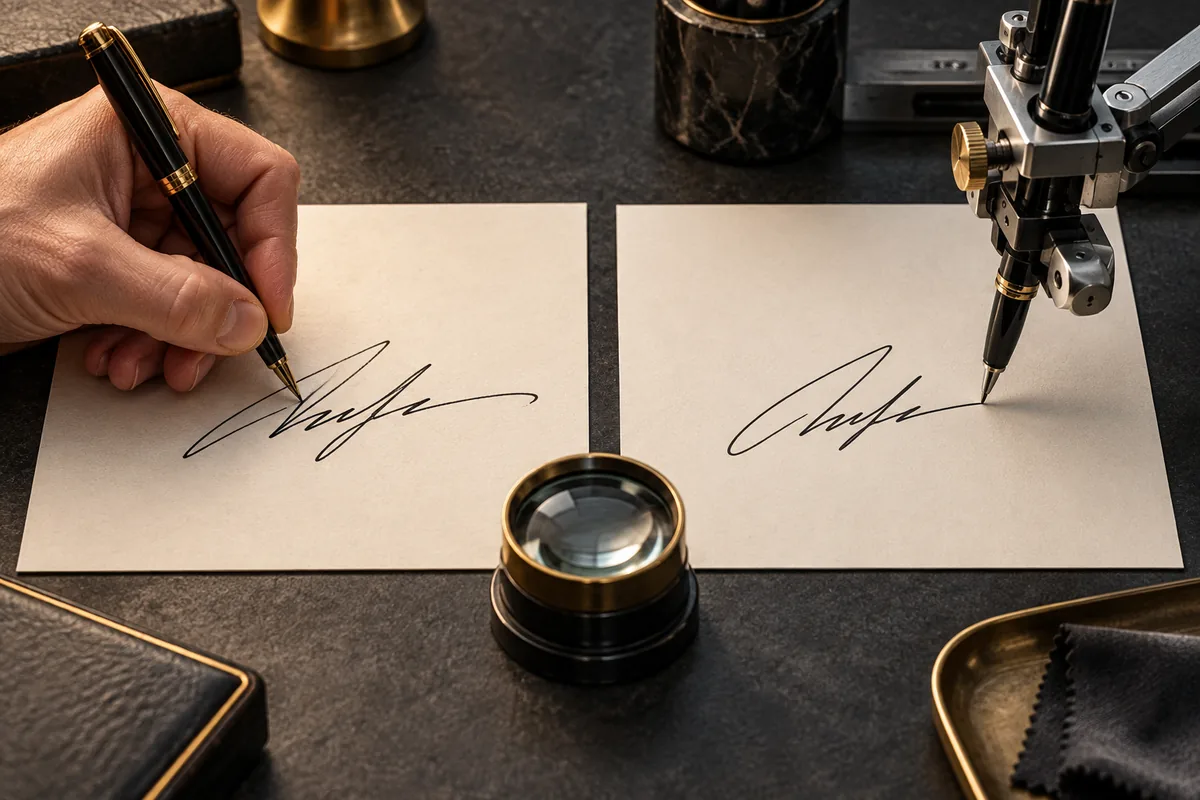
An autograph can contain real ink without being personally signed. Autopen machines use a stored pattern to reproduce a signature, while a hand-signed autograph is written directly by the named signer.
That distinction matters when a listing describes memorabilia as signed. The signature method, the item that was signed, and the available authentication documentation should all be clear before you order.
Autopen vs Hand-Signed Autographs: What Is the Difference?
A hand-signed autograph is written by the named person directly on the item. An autopen signature is applied by a machine that guides a real pen through a stored signature pattern. Both may place ink on the surface, but only one was personally written by the signer.
| Feature | Hand-Signed | Autopen |
|---|---|---|
| Who applies the signature? | The named signer | A machine using a stored pattern |
| Ink on the item? | Usually, yes | Usually, yes |
| Natural variation? | Expected between examples | The same pattern can repeat closely |
| Does the term alone prove authenticity? | No | No |
| How should it be described? | Hand-signed only when supported by the available evidence | Clearly identified as autopen |
The words “signed” and “autographed” do not always explain how a signature was produced. Read the complete description and check the available documentation rather than relying on a short product title alone.
What Does Hand Signed Mean?
Hand signed means the named signer physically wrote the signature on the item. It does not mean the autograph was printed as part of the artwork, stamped onto the surface, written by an assistant, or applied by an autopen.
The phrase describes the method of signing, not the quality of the evidence. A handwritten mark can still be misidentified or forged. Buyers should separately consider provenance, witnessed-signing information, certificates or letters, matching identification numbers, and any third-party authentication associated with the specific item.
Also confirm which component was signed. On music memorabilia, the autograph might appear on a vinyl cover, sleeve, insert, booklet, art card, disc, guitar, or another component. If the signed component is not stated clearly, ask Autographia before ordering.
How to Tell If a Signature Is Autopen
No single visual clue proves that a signature is autopen. A meaningful review compares several features and considers the item’s source and documentation.
Compare Multiple Examples
The strongest warning sign is an unusually close match between multiple signatures attributed to the same person. If the size, spacing, turns, and endpoints align almost exactly, the examples may have been produced from the same stored pattern. Genuine hand signatures normally vary, although a signer can also use more than one autopen pattern.
Inspect the Starting and Stopping Points
Some autopen signatures show small dots or heavier deposits where the machine lowers or lifts the pen. Mechanical starts and stops can look abrupt. These marks are clues, not proof, because pen type, paper, signing speed, and hesitation can create similar effects in a hand-written signature.
Look at Pressure and Line Movement
A hand-written signature may show natural changes in pressure, speed, and direction. An autopen pattern may appear more uniform or mechanically controlled. Modern machines and different writing instruments can reduce those differences, so line quality should never be the only test.
Check Whether the Mark Is Printed
Use angled light or magnification to see whether the signature sits on the surface as applied ink or appears within the printed image. A printed facsimile may share the same dot pattern, gloss, or texture as nearby graphics. Autopen usually applies real ink, so this test helps separate printing from pen-applied marks but does not distinguish autopen from hand signing by itself.
Review the Item’s Context
Ask how the item entered the market. Witnessed signing records, a credible chain of ownership, and documentation tied to the exact item can support a conclusion. Matching holograms or identifiers can connect the item to that documentation, but they do not establish the signing method on their own. A generic certificate or unsupported seller statement is less useful than item-specific evidence.
Autopen vs Printed, Stamped, and Secretarial Signatures
Autopen is only one way a signature can appear without being personally written by the named signer.
- Autopen: a machine moves a pen through a stored signature pattern.
- Printed facsimile: the signature is reproduced as part of the printed image or design.
- Stamped signature: ink is transferred from a stamp made in the shape of a signature.
- Secretarial signature: another person writes the public figure’s name, usually in an attempt to imitate that person’s signature.
Each category should be described accurately. “Real ink” does not automatically mean hand signed, and “looks handwritten” does not establish who wrote it.
Are Autopen Signatures Worth Anything?
Some collectors are interested in autopen items because of the person, event, document, or design involved. They remain a different category from hand-signed autographs and should not be presented as equivalent. Any assessment depends on the complete item, its context, condition, documentation, and current collector demand.
The practical rule is disclosure. A buyer should know whether an item is hand signed, autopen, printed, stamped, or secretarial before making a decision.
How Professional Authentication Reviews Autopen Concerns
Professional reviewers may compare the signature with documented exemplars and known autopen patterns, examine line movement and ink application, and consider the item’s date, medium, and source. Different providers use their own processes and conclusions.
Authentication is an expert opinion about a specific item, not a guarantee that every similar-looking signature will receive the same result. Submission also does not guarantee authentication. For more context, compare PSA, JSA, Beckett, and other authentication services, learn what a Certificate of Authenticity proves, and review why provenance matters in autograph authentication.
What to Check Before Buying a Hand-Signed Autograph
- Signing method: Look for an explicit statement that the item was hand signed.
- Signed component: Confirm whether the autograph is on the cover, sleeve, insert, booklet, art card, instrument, or another component.
- Item-specific documentation: Check the available certificate, letter, hologram, serial number, or witnessed-signing information.
- Issuer: Identify who evaluated or documented the item rather than assuming every COA represents the same process.
- Description gaps: Ask before ordering if the signature method, signed component, authentication, condition, dimensions, or included display materials are unclear.
You can also review Autographia’s authentication information and browse the current signed music memorabilia collection.
Current Examples of Hand-Signed Memorabilia
These current listings are identified as hand signed and reference item-specific third-party documentation in their titles. Inventory changes as individual pieces sell. Review the available product details and authentication before ordering, and contact Autographia if something you need to know is not stated clearly.
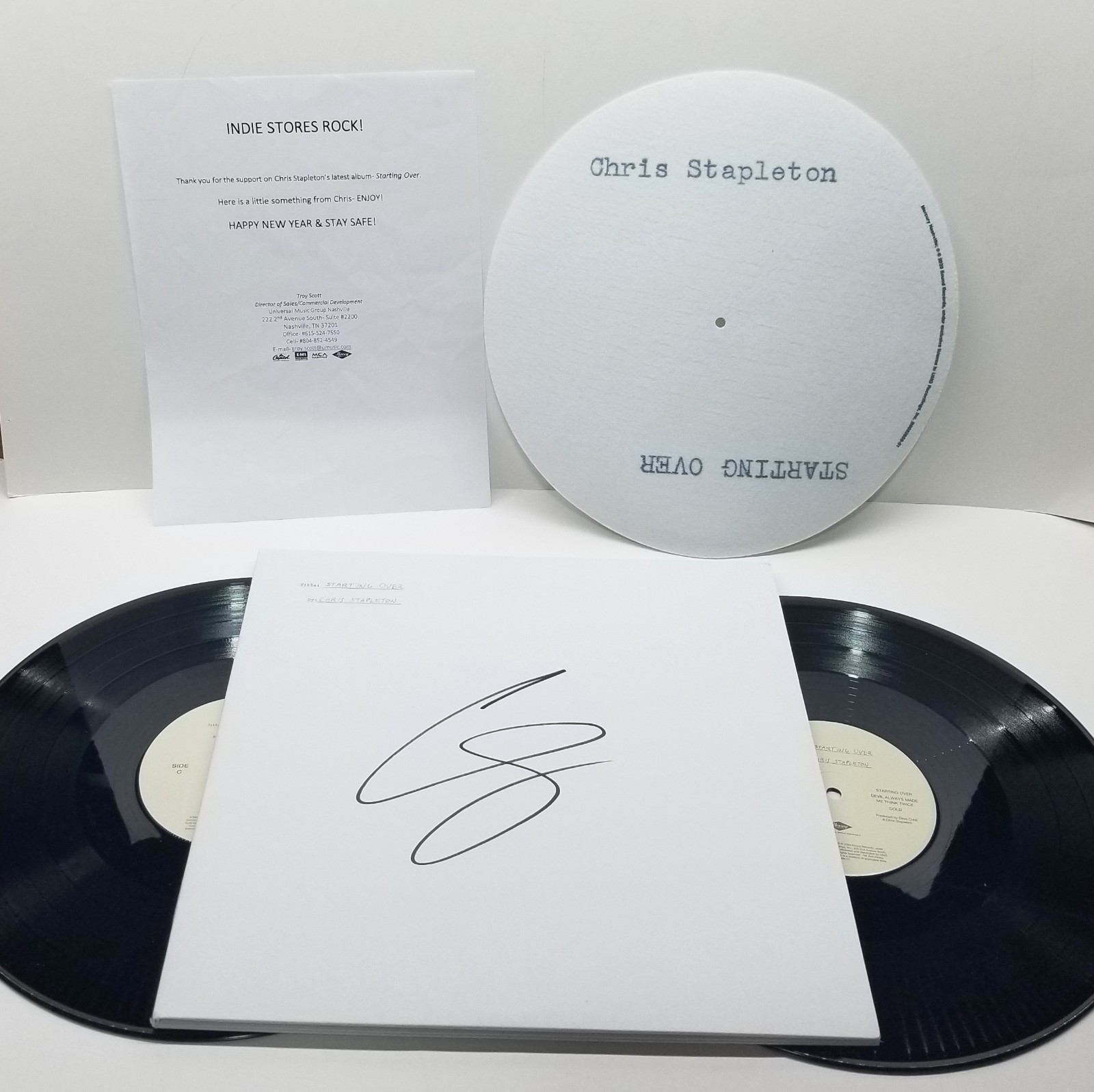
Chris Stapleton Hand-Signed Starting Over Vinyl Set
Listing references a JSA COA.

Ice-T Hand-Signed The Legend of Ice-T Vinyl
Listing references PSA/DNA documentation.

Halsey Hand-Signed Manic Vinyl
Listing references Beckett authentication.
Frequently Asked Questions
What does hand signed mean?
Hand signed means the named signer personally wrote the signature on the item. The phrase does not include autopen, printed, stamped, or secretarial signatures. It also does not replace item-specific authentication or provenance.
How can I tell if a signature is autopen?
Compare multiple examples for unusually exact repetition, then examine starting points, endpoints, pressure, line movement, ink application, and the item’s documentation. No single visual clue is conclusive, so professional review may be appropriate when the answer matters.
Is an autopen signature the same as a printed signature?
No. An autopen machine normally moves a pen and applies ink using a stored pattern. A printed signature is reproduced as part of the printed image or design. Neither should be described as personally hand signed.
Are autopen signatures worth anything?
Some collectors are interested in autopen items because of their subject, history, or design. They are a separate category from hand-signed autographs and should be labeled accurately. Any assessment depends on the complete item, context, condition, documentation, and current collector demand.
Is an autopen autograph fake?
An accurately disclosed autopen is not the same as a forged hand signature. The problem arises when an autopen item is represented as personally hand signed. Clear descriptions allow buyers to understand what they are considering.
Does a COA prove that an autograph was hand signed?
Not by itself. A COA is only as useful as its issuer, item identification, supporting evidence, and verification process. Check whether the document is tied to the exact item and what conclusion the issuer actually reached.